Culture · The Market
Why a Dinosaur Skeleton Can Now Cost as Much as a Masterpiece
Sotheby’s sale of Jodi, at $47.3 million, follows a record $50.1 million for a T. rex in July and raises questions about who gets to see such objects.
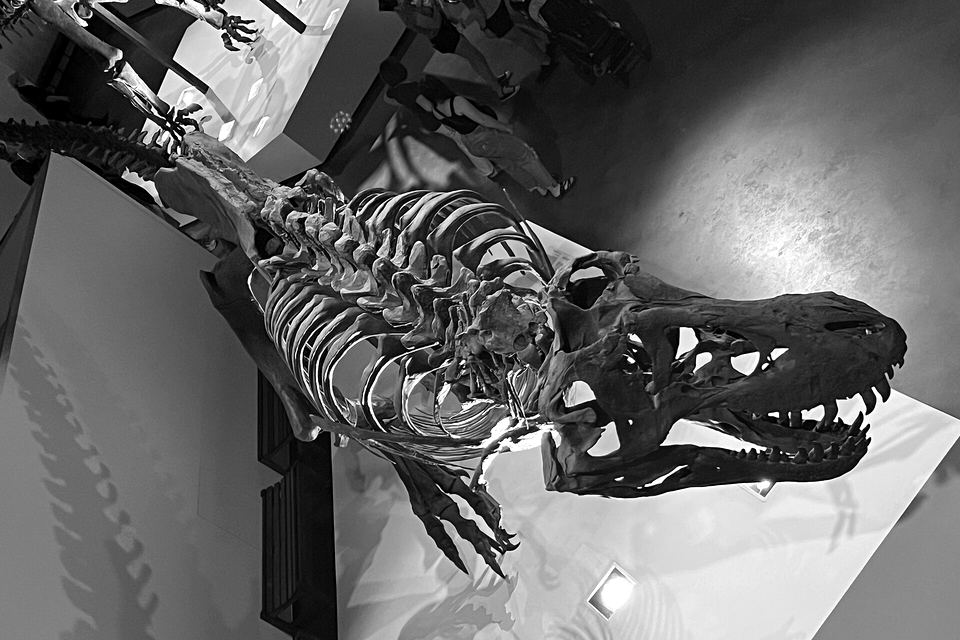

A fossil skeleton sold on Tuesday night in New York for $47.3 million, including fees. Sotheby’s auctioned Jodi, a Nanotyrannus found in Montana, for well beyond the $6 million to $9 million the auction house had estimated beforehand. ARTnews reported a hammer price of $40.5 million before fees, a figure the paper could not independently confirm. The buyer was not disclosed.
The sale came three months after Sotheby’s sold Gus, a Tyrannosaurus rex, for $50.1 million, which set a record for a prehistoric fossil at auction. Two sales at that level in one season show that the market for fossils has moved from the natural-history fringe into the same bidding rooms as Monet and Picasso.
Auction houses present these skeletons as sculpture and spectacle. Sotheby’s displayed Jodi, mounted, in a gallery before the sale, and visitors came to see it as they would a painting. Part of its appeal is rarity: the house says it is one of only three known Nanotyrannus skeletons, and the species has been in the news because of scientific papers arguing it was distinct from T. rex.
That appeal also creates a tension. Museums, funded by public money and donations, usually cannot compete with collectors who can pay tens of millions of dollars. Coverage of the sale raised concern that important fossils bought by private owners may not stay available for scientific study or public display. Paleontologists have long made this argument about the commercial trade, since a specimen locked in a private home can be measured by no one else, and findings based on it are hard to check.
Sellers and collectors make a reasonable counterpoint. Private landowners who find fossils on their property are legally entitled to sell them in the United States, and the money can fund further digs, ranch operations and conservation. Some collectors lend specimens to museums. Nothing in the reporting so far indicates what Jodi’s buyer plans.
The pattern worth watching is whether sales of this size produce arrangements for access. A lending agreement, a cast, or a promise to allow researchers to examine the bones would let the public share in a find that, until 2019, lay in a Montana hillside.
Culture has always had to decide who owns the objects that tell us about the past. The price of Jodi is a reminder that those decisions are being made, in practice, one auction at a time.
Sources
- Associated Press via Phys.org, Oct 27, 2026: Jodi sells for $47.3 million to an anonymous buyer; $6 million to $9 million estimate; Gus sold for a record $50.1 million; scientists’ objections to private sales
- Associated Press via NBC New York, Oct 13, 2026: Jodi goes on display at Sotheby’s before auction amid the scientific dispute over Nanotyrannus
- ARTnews, Oct 27, 2026: Jodi sells for $47.3 million; hammer price of $40.5 million (not independently confirmed)
- Popular Science, Oct 2026: Jodi goes to auction with a $9 million estimate
This article was drafted with automated tools from the sources listed, checked by a review pass, and published by Daniel Varrone. Corrections: editor@monochromechronicles.com