Science · Paleontology
237-Million-Year-Old Fossils Point to an Amphibian That Lived Entirely at Sea
Two armored skeletons from southern China suggest Gerrothorax maritimus survived in salt water, something no living amphibian is known to do.
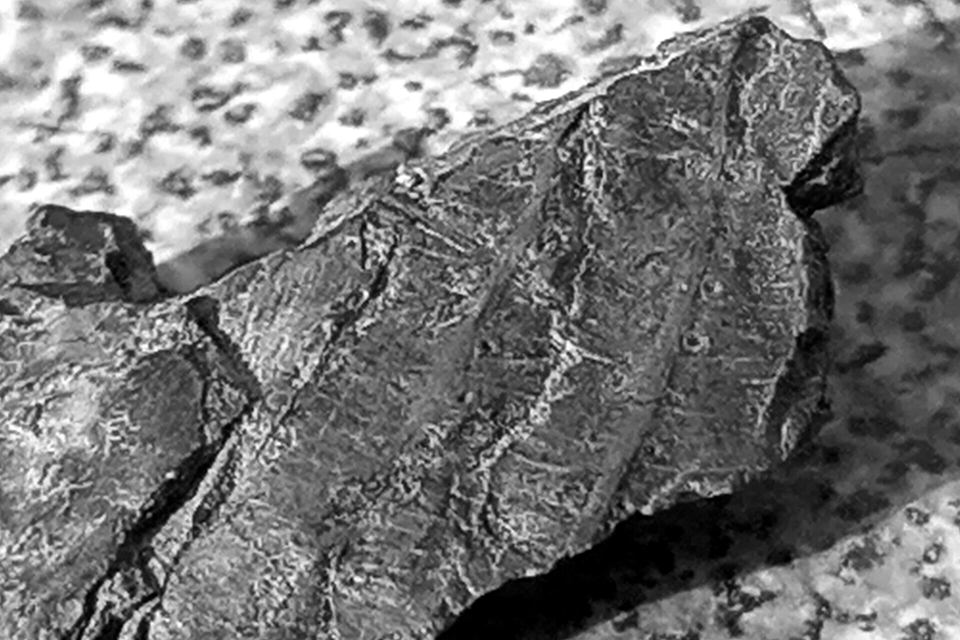

Frogs, salamanders and their relatives are creatures of fresh water and damp land. Almost none can tolerate the sea. Now paleontologists say they have found an ancient exception: an armored amphibian that appears to have lived its entire life in the ocean about 237 million years ago.
The animal, named Gerrothorax maritimus, is described in a study in the journal Nature Ecology and Evolution by researchers from the University of California, Davis, Peking University and the Geological Museum of Guizhou. The findings were reported by UC Davis and ScienceAlert.
The evidence comes from two nearly complete skeletons found in Guizhou province in southern China, in rocks dating to the Late Triassic period. The animals were flat, heavily armored and about two and a half to three feet long. Ryosuke Motani, a UC Davis paleontologist and the study’s corresponding author, compared the creature’s bulk to that of a modern giant salamander, but chunkier.
The researchers offer three main reasons to think the animal truly lived at sea rather than washing in from a river. First, the fossils were found in deep marine sediments alongside ocean animals such as ichthyosaurs, sea lilies and turtles, far from any known land. Second, the chemical signature of strontium in the bones matches the seawater of the time. Third, the skeletons are intact down to the fingers.
That last detail matters, Motani told UC Davis and the other outlets. A carcass that drifted out to sea would likely have fallen apart, he said, but because the fingers were preserved, the animals probably died near where they lived.
The team suggests Gerrothorax maritimus was an ambush predator that lay on the sea floor and sucked in prey that came close. They also propose that its armor limited how much salt water passed through its skin, and that it may have handled salt by drinking seawater and processing it through its gut.
The finding stands out because of how unusual it would be. Of more than 8,000 living amphibian species, none is known to live fully in the ocean, and fewer than 2 percent show any tolerance for salt, according to UC Davis and ScienceAlert.
The conclusions come with caveats. They rest on just two specimens. The feeding style and the way the animal coped with salt are hypotheses rather than direct observations, and ScienceAlert noted that the researchers do not know whether early amphibians like this one had permeable skin like modern species. The authors judged the drifting-carcass explanation very unlikely rather than impossible.
Even so, the fossils widen the picture of what early amphibians could do, and they suggest that the line between land, fresh water and sea was crossed by more kinds of animals than scientists had assumed.
Sources
- UC Davis News, Oct 26, 2026: 237-million-year-old fossils from Guizhou, two nearly complete skeletons, size, strontium evidence, preserved fingers, suction feeding, Motani quotes, living amphibians’ salt intolerance
- ScienceAlert, Oct 27, 2026: species name Gerrothorax maritimus, Nature Ecology and Evolution paper, specimen length, distance from land, ichthyosaurs, crinoids and turtles, strontium, salt tolerance of living amphibians, caveats about skin permeability and the drifting-carcass explanation (later source)
This article was drafted with automated tools from the sources listed, checked by a review pass, and published by Daniel Varrone. Corrections: editor@monochromechronicles.com