Opinion · Editorial
A Choice Between War and a Deal Should Not Be One Man’s to Make
The president says he is weighing whether to finish off Iran or sign an agreement. Before any new campaign, Congress should debate it and vote.

President Trump told a Sunday television audience that he has a decision to make about Iran: reach a deal, or finish the war by force. According to Bloomberg News, he described the military option as easy, a remark the paper could not independently confirm. Americans have heard that word before, at the start of conflicts that turned out to be anything but.
This war is now eight months old. It began on Feb. 28, when the United States and Israel struck Iran. An interim arrangement brokered by Pakistan and Qatar in June was supposed to reopen the Strait of Hormuz, lift the American blockade of Iranian ports and open talks on a broader agreement. It came apart. Since then, the region has lurched between strikes, threats and shuttle diplomacy, and Americans have paid at the pump, with gasoline well above $4 a gallon, up from under $3 before the war.
The president deserves credit for keeping a diplomatic channel open. Qatari mediators traveled to Tehran on Sunday in coordination with Washington, and senior officials from Saudi Arabia, Turkey and Pakistan are pressing both sides to avoid another round of fighting. Iran’s foreign ministry says messages are still moving through intermediaries. That is the path most likely to end this conflict, and officials cited by Bloomberg say as much.
What is troubling is the way the alternative is being presented: as a personal decision, timed, by the president’s own account, to come after the Nov. 3 midterm elections. A third aircraft carrier group is heading to the region. Diplomatic staff are being pulled back. The machinery for a major escalation is moving, and the only public debate about it is happening in a cable news interview.
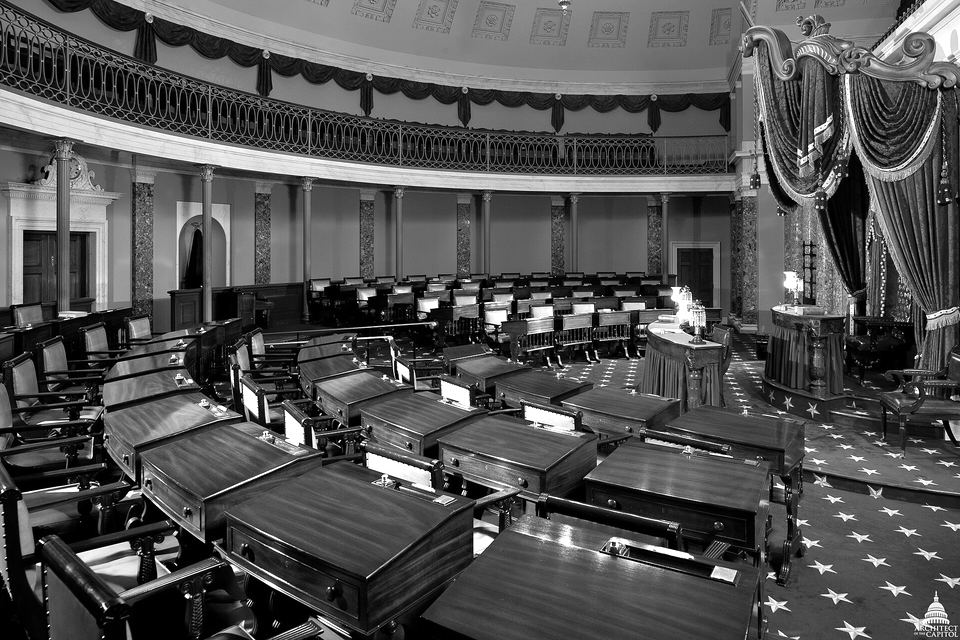
The Constitution gives Congress, not the president alone, the power to take the country to war. Presidents of both parties have stretched that line for decades, and Congress has too often been glad to let them, sparing members a hard vote. But a renewed campaign against Iran, with American sailors in the Gulf and oil markets on edge, is precisely the kind of decision the framers wanted debated in the open.
There is a serious argument on the other side. Supporters of the president’s approach say that the threat of overwhelming force is what keeps Tehran at the table, and that tying the commander in chief’s hands in public would weaken his leverage at a delicate moment. Coercive diplomacy is real, and a credible threat can prevent a war rather than start one.
But leverage does not require secrecy about whether the country is about to go back to war, and it does not require waiting until the votes are counted to decide. If the administration believes a new military campaign is necessary, it should make that case to Congress and to the public now, with its goals, its costs and its exit plan laid out.
Lawmakers, for their part, should stop treating war powers as someone else’s problem. They should demand briefings, hold hearings and, if a new campaign is planned, vote on it.
The choice the president described is real. It is also too consequential to be made by one person on a timetable set by the election calendar.
Sources
- CBS News, Oct 25-26, 2026: Trump’s Fox interview on a deal or finishing Iran, war began Feb. 28, June interim deal, Qatari mediators, regional delegations, third carrier group, staffing reductions, strikes after midterms; gasoline $4.29 versus $2.87 before the war
- Bloomberg (via Yahoo Finance), Oct 25, 2026: Trump’s ‘decision to make’ remarks, carrier group, staffing cuts, officials see a deal as the likeliest end, possible strikes after the election
- NBC News, Oct 26, 2026: Qatari mediation, June deal unraveled, Iran says messages still passing through intermediaries (later source)
- Associated Press (via ABC News), Oct 27, 2026: national average gasoline about $4.27 a gallon, $3.05 a year earlier (later source)
- AAA, Feb 26, 2026: national average for regular gasoline $2.98 a gallon, two days before the war began
- Australian Associated Press (via Newcastle Herald), Oct 2, 2026: USS Theodore Roosevelt strike group heading to the Middle East as a third carrier in the region
This editorial was drafted with automated tools from the sources listed, checked by a review pass, and published by Daniel Varrone. Corrections: editor@monochromechronicles.com