Technology · Explainer
How Data Centers Became an Issue in This Year’s Midterm Campaigns
The giant computing facilities behind the AI boom have turned into a target for candidates in both parties, as neighbors complain about power bills, water, noise and land.
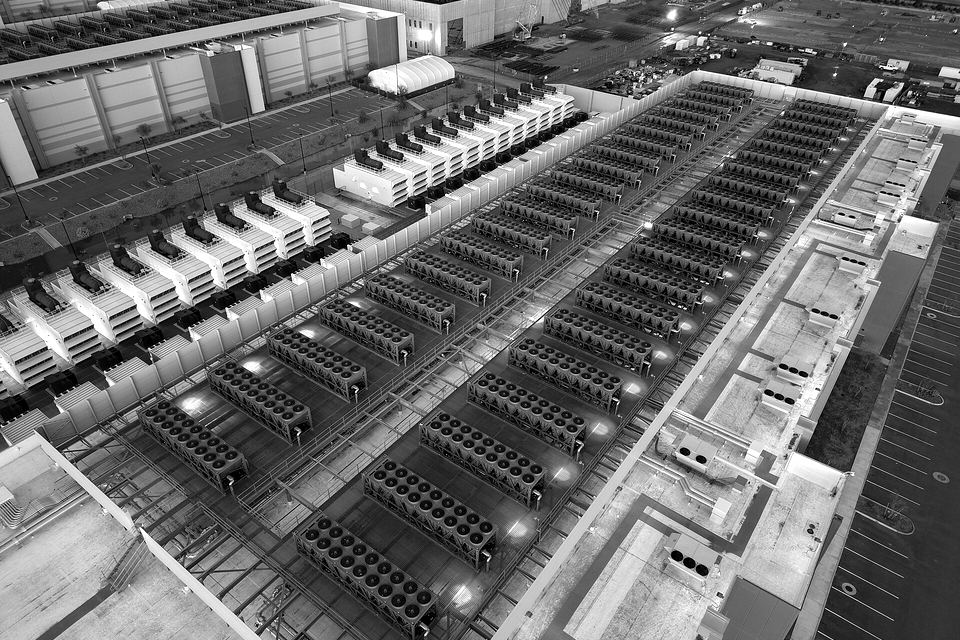

The buildings that power artificial intelligence are rarely seen by the people who use it, but in this year’s midterm campaigns they have become one of the most visible symbols of the technology industry, and one of its biggest political liabilities.
More than 150 campaign commercials across the country have focused on data centers or the AI industry, The Guardian reported this week. The Guardian described an ad from a Democratic-aligned political action committee in Tennessee that shows a clear stream turning brown as concrete data centers crash onto its banks and blames a Republican congressional candidate for a state law that eased their construction, and a Democratic congressional committee ad in Ohio that labels a Republican candidate Data Center Derek over a tax break. Republicans have answered with their own ads promising to be tough on the facilities.
The backlash is rooted in local concerns. Data centers are vast warehouses of servers that consume large amounts of electricity and, in many designs, water for cooling. Neighbors worry about rising power bills, strain on water supplies in dry regions, constant noise from cooling equipment and fumes from backup diesel generators. A Pew Research Center survey last month found that the share of American adults who see data centers as mostly bad for the environment, home energy costs and quality of life nearby had risen across demographic and partisan groups since January, and only 4 percent said they were mostly good for any of those.
Local governments are responding. More than 500 counties and municipalities have passed permanent or temporary limits on new data centers, according to figures cited by The Guardian, and in 16 states at least one candidate for governor has called for a temporary moratorium, according to the policy tracking firm MultiState.
Spain offers a view of the same tension abroad. In the drought-stricken region of Aragon, Amazon Web Services has pledged to spend almost $40 billion on several large complexes, and Microsoft and Blackstone have signed deals of their own, NPR reported this week. The regional government has welcomed the projects as the foundation of a new economy, while many residents and activist groups warn of an environmental crisis over water and land, and Spain’s national government is weighing new restrictions.
The issue scrambles the usual partisan lines. President Trump and his administration have championed rapid AI development, but Republicans are increasingly breaking from that agenda, Reuters reported in September; Ken Paxton, the Texas attorney general and Senate candidate, has hardened his stance and unveiled a plan aimed at what his campaign called the negative impact of data centers. Meanwhile, money from the industry is pouring into the campaigns: The Guardian reported that tech companies and their leaders, including Elon Musk, have spent more than half a billion dollars on 2026 elections and ballot measures, with super PACs on both sides of the AI regulation debate.
Supporters of the build-out make a serious case. Local and regional officials tout data centers as sources of investment and new economic activity, and the industry insists that growing demand for cloud computing and AI services can only be met by ever-larger facilities. Synergy Research Group, an industry tracker, said in July that the United States will continue to account for well over half of the world’s operational data center capacity.
Polls still show voters ranking the economy, health care and democracy above technology, The Guardian reported. But in close races even a second-tier issue can matter, and candidates in both parties have plainly concluded that being seen as the data center candidate is a risk they would rather not take.
Sources
- The Guardian, Oct. 22, 2026: more than 150 data center and AI campaign ads, Tennessee and Ohio examples, more than half a billion dollars in tech election spending
- The Guardian, Oct. 24, 2026: neighbors’ concerns about noise and diesel generators, industry argument for larger facilities, local politicians’ support, more than 500 local bans
- NPR, Oct. 22, 2026: Aragon, Spain, data center build-out, Amazon’s nearly $40 billion pledge, Microsoft and Blackstone deals, regional government’s support, residents’ environmental objections, national government weighing restrictions
- Pew Research Center, Sept. 22, 2026: survey of July 20 to Aug. 9 showing more negative views of data centers on the environment, home energy costs and quality of life since January, across demographic and partisan groups, with 4 percent saying mostly good
- MultiState, Sept. 18, 2026: gubernatorial candidates in 16 states calling for a temporary data center moratorium
- Reuters via the Honolulu Star-Advertiser, Sept. 3, 2026: Republicans breaking from Trump’s pro-AI agenda, Paxton’s data center plan
- Synergy Research Group, July 23, 2026: United States to account for well over half of the world’s operational data center capacity
This article was drafted with automated tools from the sources listed, checked by a review pass, and published by Daniel Varrone. Corrections: editor@monochromechronicles.com