Opinion · Editorial
A Student ID Should Be Enough to Vote in New Hampshire
The Supreme Court let the state bar student identification at the polls days before the midterms. The rule solves no proven problem and puts a new hurdle in front of young voters.
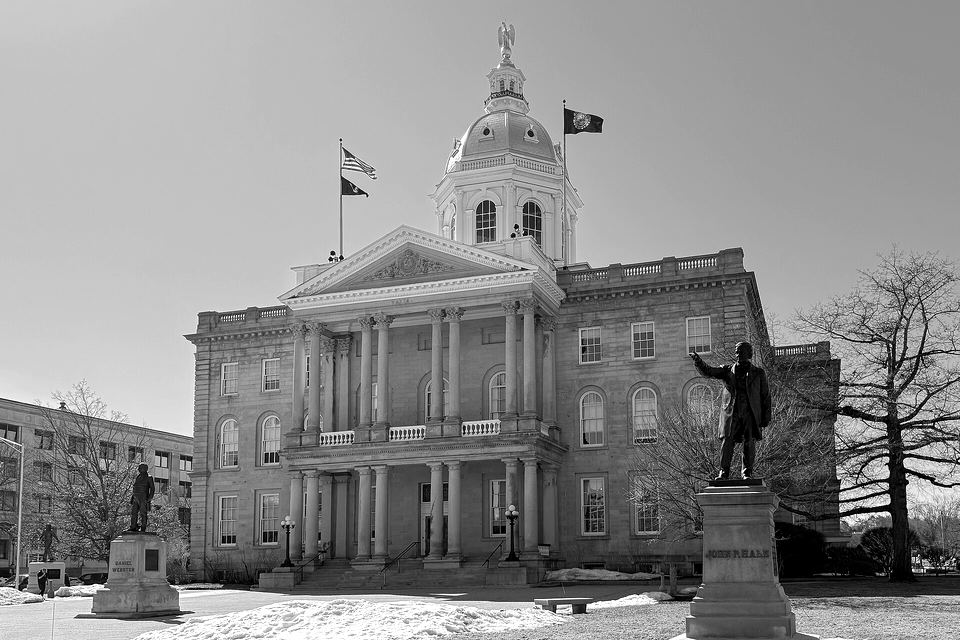

Less than two weeks before Election Day, the Supreme Court has cleared the way for New Hampshire to stop accepting student identification cards at the polls. In a brief unsigned order on Thursday, the justices granted a request backed by the Republican National Committee and set aside a lower court’s injunction while the case proceeds. Justice Ketanji Brown Jackson dissented.
The rule at issue grew out of a law signed this year by Governor Kelly Ayotte that removed student IDs from the list of standard forms of voter identification, and a state directive that barred them even as a backup under what New Hampshire calls safety-valve identification. A federal district judge blocked the directive this month. The Supreme Court’s order means it can now take effect for the midterms.
The majority’s reasoning rests on a principle with real force. The court has long held that federal judges should not change election rules on the eve of an election, because late changes can confuse voters and burden the officials who run the polls. That is the strongest argument for the order, and it deserves to be taken seriously: stable rules are a protection for voters, too. Supporters of the law also argue that tighter identification requirements guard against fraud and build confidence in results.
But the principle cuts both ways, and here it was applied to protect the late change rather than to prevent one. The directive came from state officials this year. The lower court’s order simply asked them to correct guidance that, as Justice Jackson wrote, could mislead voters and local election workers. Freezing that guidance in place days before an election does not reduce confusion. It locks it in.
And there is little on the other side of the scale. New Hampshire has required identification at the polls since 2012, and until this year student IDs were on the standard list. Nobody has shown that this produced a wave of fraud; as reporting on the case noted, there is little evidence that voter fraud affects the outcome of elections. A photo ID issued by a college, with a name and a face on it, identifies a voter about as well as many cards that remain acceptable.
What the rule does accomplish is predictable. Young voters, especially students from out of state or those who do not drive, are less likely to carry a New Hampshire driver’s license or a passport. Voting rights advocates who challenged the directive warned it would disenfranchise exactly those voters. Many of them will now learn about the change at the polling place, where the remedy is a hurried search for other documents or a ballot not cast.
This is not an isolated fight. The broader national push for stricter voter identification has been driven by claims of widespread fraud that have not held up. Each new restriction is defended as modest. Taken together, they shift the burden of proving eligibility onto the voters least able to bear it.
New Hampshire’s lawmakers can fix this after the election by restoring student IDs to the list. In the meantime, colleges and election officials should tell students plainly, and soon, what they will need to bring. A democracy that wants its young people to participate should not make the first ballot of their lives harder to cast than the last.
Sources
- Supreme Court of the United States, Oct. 22, 2026: order in Scanlan v. Coalition for Open Democracy (No. 26A512) granting a stay of the district court’s October injunctions, citing the rule against altering election rules on the eve of an election, with Justice Jackson dissenting
- The Guardian, Oct. 23, 2026: RNC-backed appeal, Ayotte’s law removing student IDs, safety-valve directive, ID requirement since 2012, advocates’ disenfranchisement argument, Republicans’ fraud rationale, Jackson’s dissent on misleading guidance
- Associated Press via WBUR, Oct. 23, 2026: the Republican National Committee weighed in to support the state’s emergency request; Republican-backed appeal granted
- Valley News, Oct. 21, 2026: HB 323 signed by Gov. Kelly Ayotte in April; RNC amicus brief in support of the state’s request to the Supreme Court
This editorial was drafted with automated tools from the sources listed, checked by a review pass, and published by Daniel Varrone. Corrections: editor@monochromechronicles.com