Science · Mars
Perseverance Becomes the Farthest-Traveled Vehicle on Another World
NASA’s Mars rover passed the 28.06-mile mark set by Opportunity, covering the distance in about five and a half years. Most of the driving was planned by the rover itself.
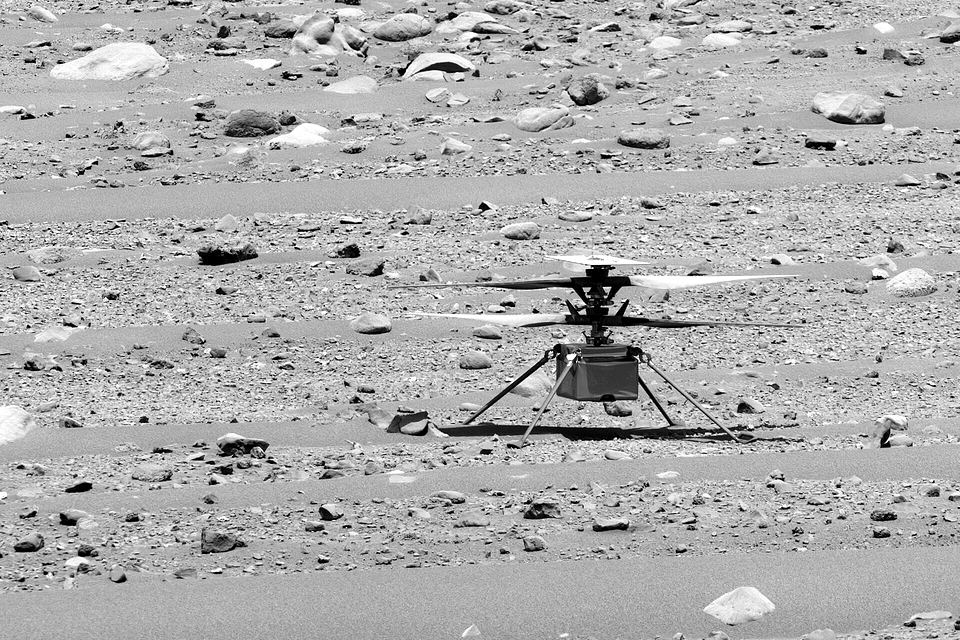

NASA’s Perseverance rover has driven farther across the surface of another planet than any vehicle before it, the space agency said, passing a record that its predecessor Opportunity took nearly 15 years to set.
As of Sunday, Perseverance had logged 28.10 miles, or 45.22 kilometers, on Mars. Opportunity, which explored the planet from 2004 to 2018, finished its mission at 28.06 miles. A navigation camera image taken on Oct. 11, the rover’s 2,006th Martian day, marks the moment the record changed hands. Perseverance covered the distance in about five and a half years.
The rover landed in Jezero Crater in February 2021 and is now driving along the crater’s western rim, an area scientists think may hold some of the oldest rock in the solar system. The team hopes to find traces of ancient hydrothermal systems there, places where underground heat once warmed water and might have created conditions suitable for microbes. NASA recently approved the mission’s first extension, which began this month and runs through about the end of 2028.
Much of the credit goes to software. Perseverance’s autonomous navigation system photographs the terrain as the rover moves, builds a three-dimensional map of hazards and plans its own route between waypoints chosen by engineers on Earth, an approach the team describes as thinking while driving. The rover has covered more than 90 percent of its distance this way, compared with about 5 percent for Opportunity and its twin, Spirit. Where the 1997 Sojourner rover used 20 measurement points to judge its path, Perseverance processes about 600,000.
Mission planners originally expected the rover to drive no more than about 12.4 miles. Steven Lee, project manager for the Curiosity and Perseverance rovers at NASA’s Jet Propulsion Laboratory, said the rover had blown well past that figure, that long drives have become routine and that it will likely keep adding to its record for years. Mark Maimone, a deputy team chief for robotic operations, said newer software lets the rover check its position against orbital maps in the middle of a drive and cut down on unnecessary steering, and that glare from the sun in its navigation cameras is the next problem to solve.
Distance is a means rather than the goal. The record matters to scientists mainly because faster, more independent driving lets the rover reach more rock outcrops before its power and hardware wear out, and the mission’s lasting value will rest on what it finds along the crater rim rather than on the odometer.
Scientists working with Perseverance have already pieced together a timeline of the crater’s history, and NASA said in 2023 that microbial life may once have existed there.
Sources
- NASA Jet Propulsion Laboratory, Oct. 12, 2026: 28.10 miles versus Opportunity’s 28.06, record set Oct. 11 on sol 2,006, five and a half years versus nearly 15, western rim and hydrothermal targets, AutoNav share of driving versus Opportunity and Spirit, Sojourner comparison, mission extension through about 2028, statements by Steven Lee and Mark Maimone
- CBS News, Oct. 13, 2026: farthest vehicle on another planet, 28.1 miles as of Sunday, Opportunity’s record, February 2021 landing, Jezero rim and oldest terrain, ‘thinking while driving,’ original 12.4-mile expectation, Steven Lee’s comments, extension to end of 2028, 2023 finding on possible microbial life
This article was drafted with automated tools from the sources listed, checked by a review pass, and published by Daniel Varrone. Corrections: editor@monochromechronicles.com