Science · Nobel Prizes
Halzen Wins Physics Nobel for Turning South Pole Ice Into a Neutrino Telescope
The University of Wisconsin-Madison physicist is the sole winner, honored for leading the IceCube observatory and the discovery of high-energy neutrinos from beyond the solar system.
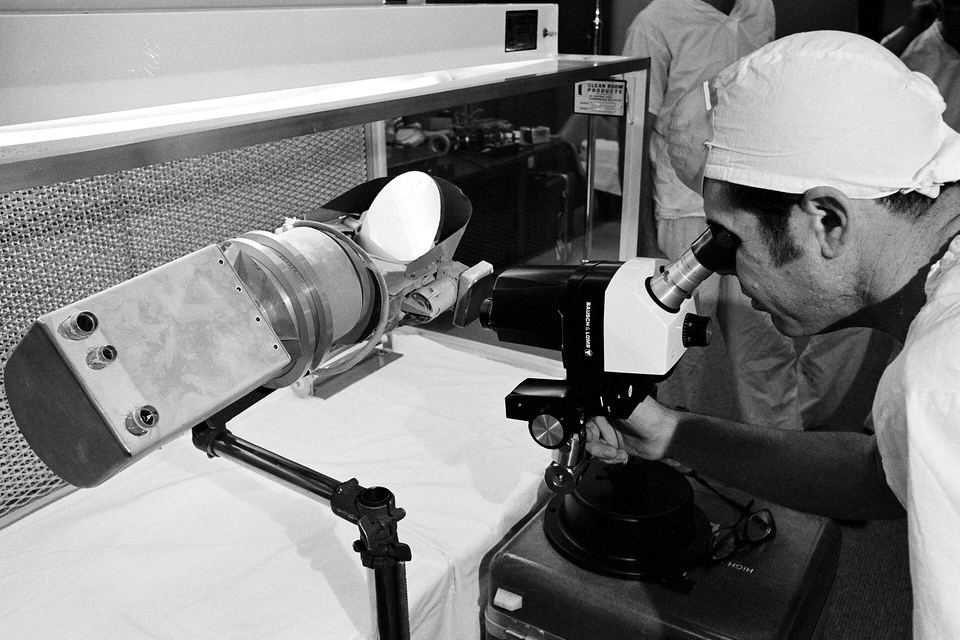

Francis Halzen, a physicist at the University of Wisconsin-Madison, won the 2026 Nobel Prize in Physics on Tuesday for leading the effort to build a giant neutrino detector inside the Antarctic ice sheet and for the discovery of high-energy neutrinos arriving from deep space.
The Royal Swedish Academy of Sciences awarded the prize to Halzen alone “for decisive contributions to the IceCube Neutrino Observatory and the discovery of high-energy neutrinos of astrophysical origin.” A single, unshared physics prize has become uncommon in recent decades. Halzen, 82, was born in Belgium. He will receive the full award of 12 million Swedish kronor, about $1.2 million.
Neutrinos are among the most elusive particles in nature. They carry no electric charge and almost never interact with matter, so trillions pass through every person each second without a trace. That same quality makes them valuable messengers: unlike light, they travel across the universe without being absorbed or deflected, carrying information from the most violent places in the cosmos.
Catching them requires an enormous detector. In 1988, Halzen proposed using the clear, stable ice beneath the South Pole for the job, The Week reported, and early tests of sensors followed a few years later. The result, IceCube, uses about a cubic kilometer of deep ice studded with light sensors. On the rare occasions when a neutrino strikes an atomic nucleus in the ice, it produces a faint flash of light that the sensors record. The size is essential because high-energy cosmic neutrinos are so scarce. The site’s geology also helps, since the region is stable and free of earthquakes.
IceCube, which is led by the University of Wisconsin-Madison, went on to detect neutrinos whose energies pointed to sources far beyond our solar system, the discovery the Nobel committee singled out. The findings opened what scientists call neutrino astronomy, a way of studying the universe that complements telescopes that collect light.
Mark Pearce, chair of the Nobel Committee for Physics, said Halzen had led an international team of researchers and engineers who built a fantastic instrument, and that his tenacity and scientific vision had paved the way for a new kind of astronomy, according to the committee’s announcement.
Halzen spoke with the committee by phone from Italy. He said the news was a great surprise that he had not expected and that it made him feel strange, the Associated Press reported.
Last year’s physics prize went to John Clarke, Michel Devoret and John Martinis for experiments with quantum circuits. The chemistry prize will be announced Wednesday. Halzen will receive his medal from King Carl XVI Gustaf in Stockholm on Dec. 10.
Sources
- Associated Press via Georgia Public Broadcasting, Oct. 6, 2026: Halzen’s age, Belgian birth, University of Wisconsin-Madison affiliation and leadership of IceCube, research dating to the 1980s, phone call from Italy, quotes from Halzen and Mark Pearce, prize amount
- Reuters via China Daily Hong Kong, Oct. 6, 2026: citation wording, announcement by the Royal Swedish Academy of Sciences, 12 million crowns, medal presentation on Dec. 10
- The Week (India), Oct. 6, 2026: 1988 idea to detect neutrinos in South Pole ice, cubic kilometer of ice with light sensors, how detection works, why the site was chosen, Pearce quote on a new kind of astronomy
- The Guardian, Oct. 6, 2026: Halzen wins physics prize for South Pole neutrino work with the IceCube detector
- Devdiscourse, Oct. 6, 2026: 2025 prize to Clarke, Devoret and Martinis
- AFP via Khaleej Times, Oct. 6, 2026: citation ‘for decisive contributions to the IceCube Neutrino Observatory and the discovery of high-energy neutrinos of astrophysical origin’
- Associated Press via NBC Bay Area, Oct. 6, 2026: Mark Pearce’s statement on Halzen’s team, tenacity and vision; Halzen’s call from Italy, his great surprise and feeling strange
This article was drafted with automated tools from the sources listed, checked by a review pass, and published by Daniel Varrone. Corrections: editor@monochromechronicles.com