World · Brazil Votes
Flávio Bolsonaro Edges Lula in Brazil’s First Round, Forcing an Oct. 25 Runoff
The senator and son of the jailed former president beat the polls with about 47 percent, while President Luiz Inácio Lula da Silva finished near 45 percent.
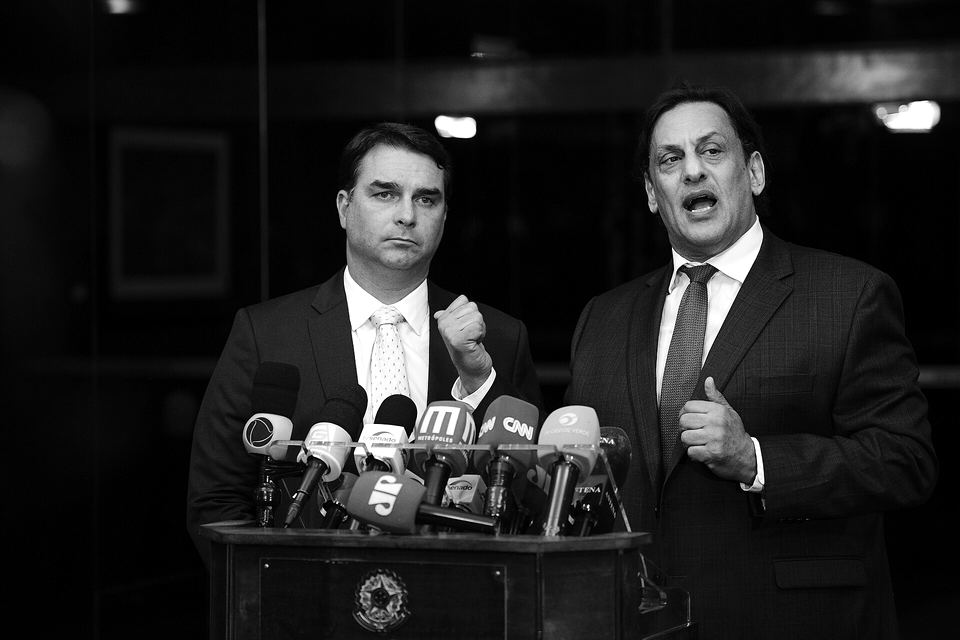

Senator Flávio Bolsonaro finished first in Brazil’s presidential election on Sunday, confounding polls that had shown President Luiz Inácio Lula da Silva ahead and sending the two men to a runoff on Oct. 25.
With nearly all votes counted, Bolsonaro, of the right-wing Liberal Party, had about 47 percent of valid votes and Lula about 45 percent, according to figures from the Superior Electoral Court reported by Reuters, Al Jazeera and MercoPress. Neither reached the 50 percent needed to win outright. Bolsonaro drew about 56 million votes to almost 53 million for Lula, Al Jazeera reported.
The result was a surprise. The Datafolha survey published the day before the vote had Lula at 45 percent and Bolsonaro at 42, and the Quaest poll had Lula five points ahead, MercoPress reported. Lula, 80, who is seeking a fourth, nonconsecutive term, acknowledged the setback. He said he had been convinced he would win in the first round and called the runoff the real test.
Bolsonaro, 45, is the eldest son of former President Jair Bolsonaro, who narrowly lost to Lula in 2022 and is now serving a 27-year sentence for plotting a coup after that defeat. The elder Bolsonaro is barred from running. Flávio Bolsonaro has pledged to seek an amnesty for his father, though he did not mention him in his victory speech in Brasília, where he declared that Brazil wants change.
The right also performed strongly in Congress. The Liberal Party was on track to become the largest party in the Chamber of Deputies and to gain Senate seats, Al Jazeera reported. Michelle Bolsonaro, the former first lady, won a Senate seat in the Federal District, and another son, Carlos Bolsonaro, was elected senator in Santa Catarina.
Brazilians also chose governors, the entire lower house, two-thirds of the Senate and state legislators. Voting was largely orderly; storms caused power cuts at some polling places, but the electronic voting machines were unaffected, according to MercoPress.
The campaign has turned on crime, the cost of living and Brazil’s strained relationship with the United States, as well as a broader rightward shift in Latin America. Some analysts told Reuters that Bolsonaro may have benefited from protest votes that he will struggle to expand on in the second round. Bolsonaro’s camp counters that the result shows a real appetite for change, and Andre Pagliarini, a historian at Louisiana State University, told Al Jazeera that millions of Brazilians evidently feel the right best reflects their values.
The runoff may hinge on the roughly 8 percent of voters who backed other candidates, including Ronaldo Caiado and Renan Santos, two of whom have said they will not endorse either finalist. Turnout among lower-income Brazilians, the core of Lula’s support, will also matter; abstention was about 21 percent in 2022. Lula has also criticized the Bolsonaro family, pointing to an investigation involving Flávio Bolsonaro in which he has not been charged.
Sources
- Reuters via Emirates 24/7, Oct. 5, 2026: preliminary results putting Bolsonaro ahead of Lula, runoff set for Oct. 25
- Al Jazeera, Oct. 5, 2026: about 56 million versus almost 53 million votes, analysts on protest votes, Lula’s quotes, ages, Jair Bolsonaro’s 27-year sentence, Liberal Party gains, Michelle and Carlos Bolsonaro elected, campaign issues
- MercoPress, Oct. 5, 2026: final shares of about 47 and 45 percent, Datafolha and Quaest polls, other candidates’ 8 percent, 2022 abstention, Bolsonaro’s speech, orderly voting, Banco Master investigation without charges
- The Guardian, Oct. 5, 2026: Flávio Bolsonaro’s surprise first-round lead
This article was drafted with automated tools from the sources listed, checked by a review pass, and published by Daniel Varrone. Corrections: editor@monochromechronicles.com