Science · Climate
Swiss Glaciers Lose 5.5 Percent of Their Ice, the Second-Largest Melt on Record
A dry winter and the hottest Swiss summer on record pushed losses to nearly 20 percent of the country’s glacier ice since 2021, monitoring scientists reported.
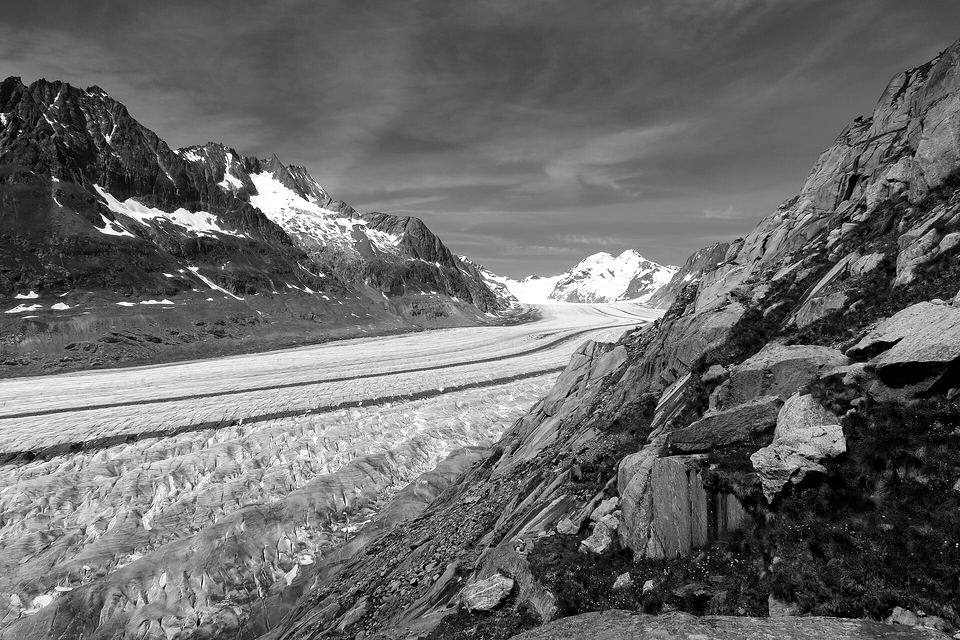

Switzerland’s glaciers lost about 5.5 percent of their remaining ice in the 12 months that ended on September 30, the second-largest annual decline since record-keeping began, according to the country’s glacier monitoring network.
The report by the Swiss Glacier Monitoring Network, known as GLAMOS, and the Swiss Academy of Sciences’ commission on cryosphere observation found that the glaciers have now lost nearly 20 percent of their ice since 2021, Al Jazeera reported. Euronews also described the 2026 losses as the second-worst on record.
Two kinds of weather combined to produce the damage. A winter with little snowfall left the ice poorly insulated, so melting began earlier than usual, and then a summer marked by heat waves in June and July became the hottest on record in Switzerland, according to the reports. Average glacier thickness fell by 2.5 to 4 meters this year, and some glacier tongues, the low-lying ends of the ice, thinned by as much as 10 meters.
The scale is hard to picture. Between July and September alone, Swiss glaciers shed about 2.2 trillion liters of water, more than four times what all Swiss households use for drinking in a year, Al Jazeera reported. Researchers who visited 23 glaciers in September found that at Scex Rouge in the western Alps, at nearly 3,000 meters, a measuring pole drilled into the ice in July was sticking out about three meters further by September. Euronews showed scientists tracking rapid ice loss at the Rhône Glacier.
Matthias Huss, who leads GLAMOS, said human-caused climate change is clearly driving the losses. Smaller glaciers are shrinking fastest and in some cases vanishing entirely, he said, while the largest are losing enormous volumes.
The consequences reach well beyond the mountains. Glacier meltwater feeds hydropower reservoirs and major European rivers, and glaciologist Harry Zekollari of the Vrije Universiteit Brussel told Al Jazeera that summer water supplies will keep declining because peak meltwater flow from Alpine glaciers has already passed. Retreating ice also brings natural hazards, sends most of its water to the oceans, where it affects coastlines, and changes landscapes that support an important tourism industry.
Scientists stress that the outcome is not fixed. Zekollari estimated that cutting emissions rapidly could preserve roughly a third of Alpine ice, while strong warming could leave Swiss glaciers with less than a tenth of their volume by 2100. Worldwide, projections suggest glaciers could lose about a quarter of their mass by the end of the century under limited warming, or about half under higher warming.
Year-to-year results depend heavily on weather, as this year’s thin snowpack showed, and a snowy winter or a cool summer can slow the losses for a season. But across the past five years the monitoring network’s figures have pointed in one direction.
Sources
- Al Jazeera, October 2, 2026: GLAMOS and Swiss Academy of Sciences report; 5.5 percent loss in the year to September 30; nearly 20 percent since 2021; thickness losses of 2.5 to 4 meters and up to 10 meters; 2.2 trillion liters lost July to September; 23 glaciers and Scex Rouge measurements; Huss and Zekollari comments; 2100 projections
- Euronews, October 1, 2026: Swiss glaciers lost 5.5 percent of remaining ice, the second-largest annual decline on record; dry winter and summer heat waves; Rhône Glacier measurements; thickness losses of 2.5 to 4 meters and tongues up to 10 meters
This article was drafted with automated tools from the sources listed, checked by a review pass, and published by Daniel Varrone. Corrections: editor@monochromechronicles.com